Image via Every
Monday, January 5, 2026
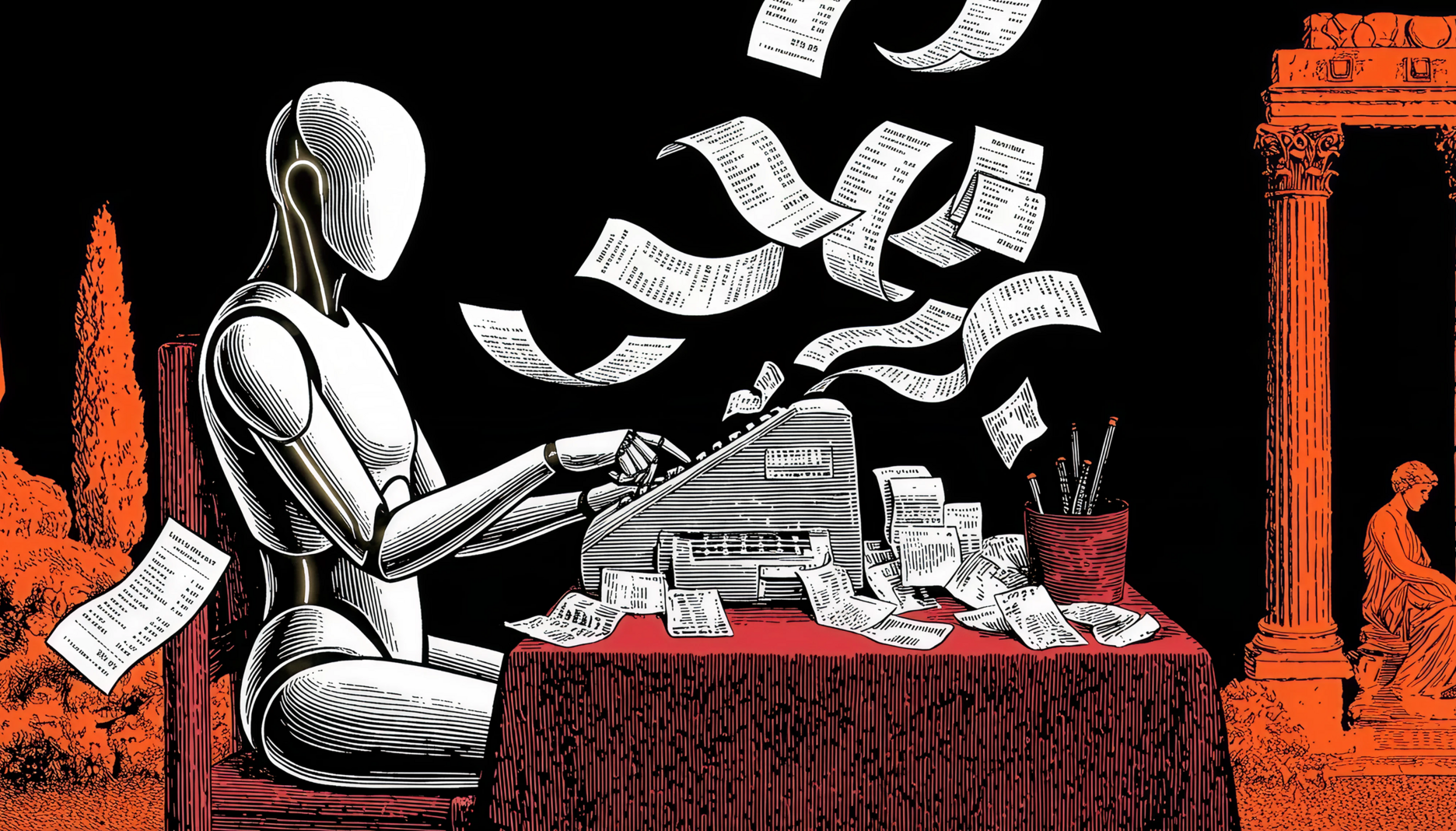
PostTrainBench: Teaching AI to train itself
PostTrainBench just dropped a new way to measure whether AI agents can actually fine-tune language models on their own (spoiler: this matters way more than it sounds). Meanwhile, Plaud is going hard at CES with an AI pin and meeting notetaker, while a much thornier problem is brewing in the background: AI completely broke SaaS pricing models, and startups are scrambling to figure out how to charge for anything anymore (yikes). On the research side, Meta's KernelEvolve is automating kernel optimization across AI accelerators, and scientists discovered that foundation models are converging on eerily similar ways of representing matter. So here's the real question: if AI agents can now fine-tune themselves, who needs us anymore?
Image via Every
Top Stories
GitHub
PostTrainBench introduces a benchmark for measuring autonomous AI agents' capability to improve small language models through post-training under resource constraints, directly evaluating AI systems' ability to conduct independent R&D tasks.
Every
AI's per-token costs have broken traditional SaaS economics, forcing startups to rethink pricing models with cross-functional rigor or face bankruptcy like MoviePass. Success requires aligning pricing strategy with actual cost structure and customer value perception rather than copying subscription-based playbooks.
TechCrunch
Plaud released a new AI pin notetaker and desktop meeting app to compete across both physical and digital note-taking markets, leveraging its 1.5M-unit installed base to challenge specialized meeting transcription services.
arXiv
Scientific foundation models across diverse architectures and modalities learn remarkably similar internal representations of matter, but only for familiar training domains—revealing both convergence toward physical reality and fundamental limitations in generalization beyond training data.
arXiv
Meta's KernelEvolve automates kernel optimization for recommendation models across heterogeneous AI accelerators, reducing development time from weeks to hours while achieving 100% correctness across diverse hardware platforms.
Keep Reading
Industry Voices
James Zou
Researcher at Stanford
Publishes cutting-edge research on AI's actual failure modes in healthcare and how foundation models leak training data.
Jan Kautz
Researcher at NVIDIA
Leads the team behind NVIDIA's graphics AI breakthroughs like neural radiance fields and real-time rendering models.
Enjoyed this issue?
Get daily AI intel delivered to your inbox. No fluff, just the stories that matter.