Image via Unknown
Tuesday, September 30, 2025
Anthropic's new Claude agents could change everything
Anthropic just dropped their Claude Agent SDK for building autonomous AI agents (bold move), while Tencent's unleashing HunyuanImage-3.0, an 80B open-source image gen model that actually reasons through what it's creating. Meanwhile, researchers are questioning whether human brains are just doing token generation like LLMs, and a new paper shows LoRA can match full fine-tuning when you apply it correctly across all layers (yikes, we've been doing this wrong?). Plus, someone's gone deep on GPU matmul kernel optimization because apparently we're not fast enough yet. Would you trust an AI agent with your workflow?
Image via Unknown
Top Stories
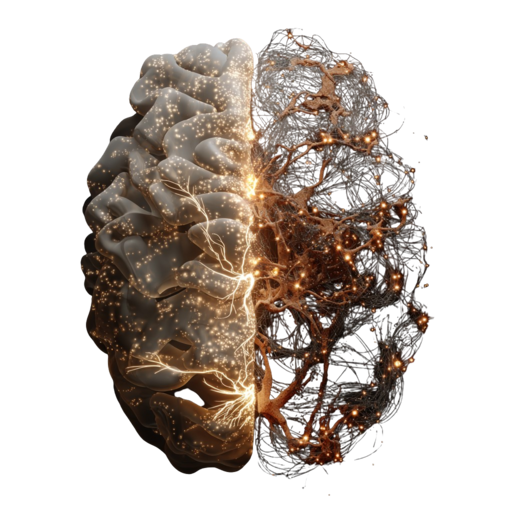
A provocative argument that human and AI world models may be more similar than assumed, both generated through learned neural patterns rather than fundamentally different processes. This challenges prevailing assumptions in AI development about what distinguishes human cognition from LLM capabilities.
aleksagordic.com
Understanding GPU matmul kernel optimization requires deep knowledge of hardware architecture, memory hierarchies, and low-level instruction sets—a progression from naive implementations through warp-tiling to modern asynchronous techniques on Hopper GPUs that can achieve near-cuBLAS performance by leveraging tensor cores, TMA, and intelligent scheduling.
Anthropic
Anthropic's Claude Agent SDK transforms Claude from a coding tool into a general-purpose agent framework by providing developers with primitives to build autonomous agents that work like humans—gathering context, taking action via computer access, and verifying their own work. This positions Anthropic to compete directly in the rapidly growing AI agents market with an emphasis on transparency, iteration, and practical deployment patterns.
GitHub
Tencent open-sourced HunyuanImage-3.0, a 80B-parameter MoE image generation model with unified multimodal architecture that rivals closed-source competitors, featuring intelligent reasoning, image-to-image editing, and significant inference optimizations.
Thinking Machines Lab
Empirical research shows LoRA matches full fine-tuning performance when applied to all layers and properly tuned for learning rate, making efficient fine-tuning viable for most post-training applications while reducing memory and computational overhead.
Keep Reading
Industry Voices
Demis Hassabis
CEO at Google DeepMind
Follow for insights on AGI timelines and protein folding breakthroughs from the mind behind AlphaGo and AlphaFold.
Alex Duffy
Head of AI Training at Every
Follow for practical takes on building AI products that people actually use in their daily workflows.
Liam Fedus
Co-founder, Former VP of Research at Periodic Labs
Follow for technical depth on LLM architecture decisions from someone who scaled models at OpenAI.
Eric Horvitz
Chief Scientific Officer at Microsoft
Follow for the intersection of AI safety, healthcare applications, and long-term thinking from a 30-year veteran.
Enjoyed this issue?
Get daily AI intel delivered to your inbox. No fluff, just the stories that matter.